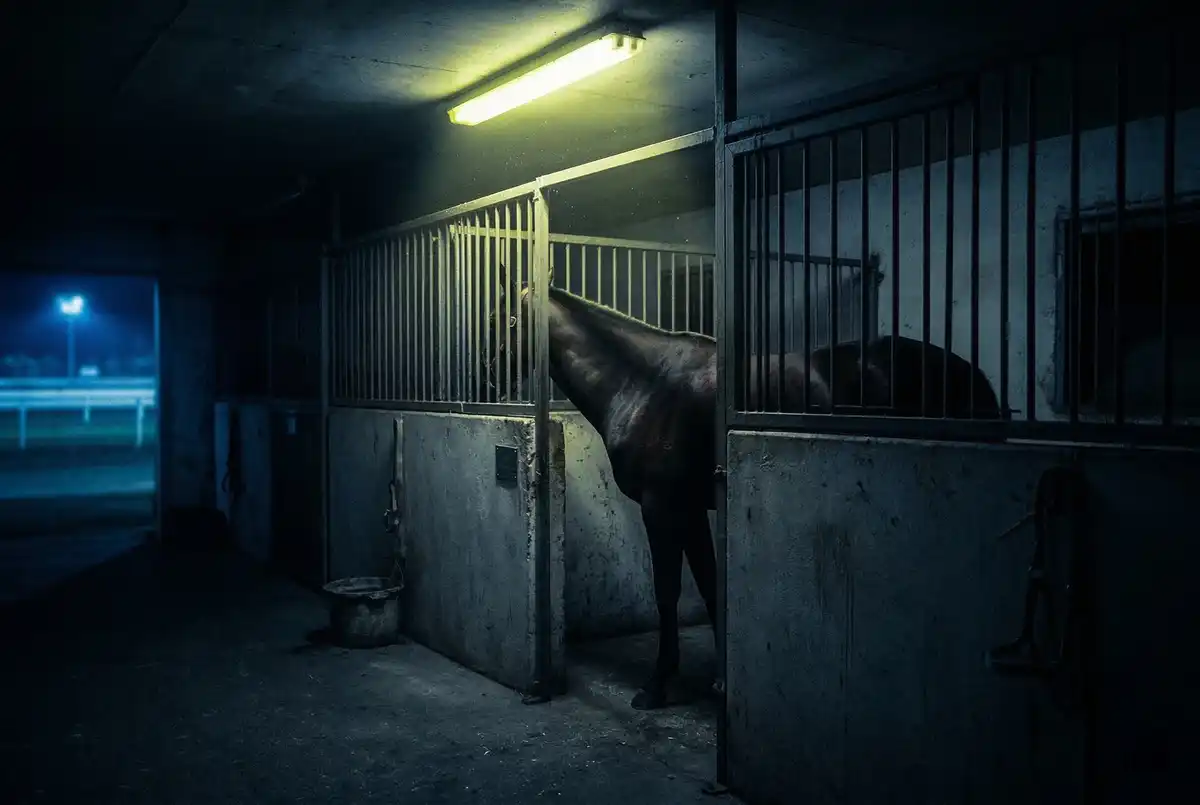
The 1984 Fine Cotton incident at Eagle Farm remains Australian racing’s most notorious integrity breach: a scheme so brazen that its failure became part comedy, part warning sign, and part turning point.
The Setup
The horse nobody noticed
Fine Cotton was an unremarkable sprinter — slow enough that nobody paid close attention to him. That obscurity made him the perfect front for a ring-in scheme.
A ring-in involves substituting a faster horse under a slower horse’s name to obtain long odds on a horse that should really be much shorter.
The Switch
The plan depended on no one looking closely
The conspirators — led by trainer Hayden Haitana and backed by Sydney identity John Gillespie — arranged to substitute Bold Personality, a faster horse, in Fine Cotton’s place. A wagering plunge was organised across multiple TABs to avoid detection. The plan: support the ring-in heavily at Fine Cotton’s long odds, collect, disappear.
The critical flaw: Bold Personality had different markings to Fine Cotton. Fine Cotton had a white sock on one leg. Bold Personality didn’t. The solution? Hair dye and bleach, applied the night before the race.
Wagering Terminology
Race Day
Eagle Farm, 18 August 1984
Fine Cotton, actually Bold Personality, was loaded into the barriers. The plunge had been so obvious that the TAB had already shortened the odds significantly. The horse won. For about 20 minutes, it looked like the scheme had worked.
Then the stewards came to the mounting yard.
“The plot did not unravel in a forensic laboratory. It unravelled because the paint started to run.”
The Unravelling
It all goes wrong in public
The hair dye was visibly running in the heat and sweat. The white sock marking didn’t look right. Trainer Hayden Haitana was seen fleeing the mounting yard. Stewards immediately ordered a hold on all race settlement and detained connections.
Racing Queensland stewards compared the horse against Fine Cotton’s official records. The markings didn’t match. The horse in the mounting yard was not Fine Cotton.
The scandal broke nationally within hours.
Stewards' Extract
What the inquiry had to establish
Eagle Farm / 1984
- Nominal runnerFine Cotton
- Actual horseBold Personality
- Visible flawRunning dye
- Official resultDisqualified
The scheme is remembered for its absurdity, but the official lesson was simple: identity checks cannot rely on trust alone.
The Fallout
The penalties were immediate
- Hayden Haitana: disqualified for life.
- John Gillespie: disqualified for life.
- Several others received lengthy bans.
- Criminal charges were laid, though convictions proved difficult.
- The TAB froze settlement on the race.
- Racing authorities across Australia faced hard questions about oversight.
It is widely described as one of the most audacious wagering coups in Australian racing history, and one that failed because of a paint job.
The Reset
What changed forever
Fine Cotton is why modern racing integrity systems exist. The brazen nature of the crime forced a massive overhaul of how horses are identified and monitored.
Identity
Permanent checks
Lip tattoos, microchips, and formal markings make a simple visual switch far harder to hide.
Oversight
Mounting-yard vigilance
Stewards now inspect horses against official records before and after a race.
Signals
Market monitoring
Unusual wagering movement is treated as an integrity signal, not a curiosity.
The scandal forever linked Eagle Farm to one of the most infamous moments in Australian sport. Discover more about the track’s evolution in our Eagle Farm profile or the nearby Doomben track.
What It Teaches
The scandal is a beginner lesson in integrity
Fine Cotton is not useful because it teaches a trick. It is useful because it explains the integrity systems beginners still hear about today: horse identification, stewards, official inquiries, market movement, and why a result is not final until the race is declared correct weight.
The Ring-In
Identity matters
The Fine Cotton debacle shows why horse identification is rigorously enforced today.
The Plunge
Movement needs context
Heavy, sudden wagering can occasionally suggest inside knowledge, which is why stewards investigate it.
The Stewards
Integrity protects trust
Officials are there to protect the credibility of the sport and the fairness of the race.
Learn the terms stewards use every day in the Racing Glossary.
Up Next
Next Lesson