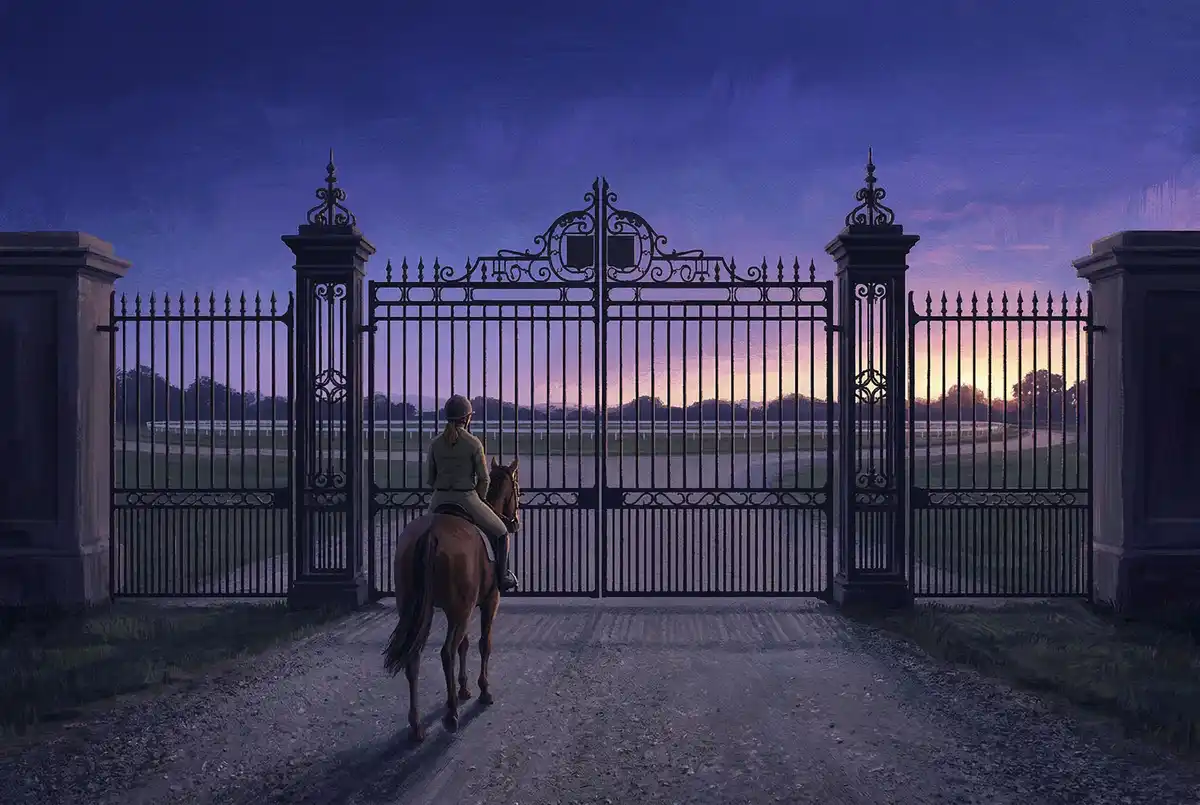
The Girl at the Gate
Pam O’Neill grew up in Ascot, Brisbane — right next to Eagle Farm Racecourse. Racing was in her blood from the start. She began riding through pony clubs and gymkhanas as a girl, developing the skills that would later make her one of the most capable riders in Queensland.
She could ride trackwork competently — getting horses fit in the early morning — but when race day came, women were banned from competing. The humiliation was routine: she would bring horses from the float and stables, walk them to the Eagle Farm entrance, and hand the reins to a male rider. Someone else would ride the horse she’d prepared.
So she started writing. One letter a month to the Queensland Turf Club jockey board, requesting permission to ride. For 14 years. More than 140 letters in total. Each one politely asking for the same thing: let me ride.
Ladies Only
The authorities tried to silence her demands by creating a “ladies only” racing circuit — a handful of women-only races as a compromise. These weren’t real opportunities. They were novelty events designed to keep women contained.
In 1974, Pam won the International Race for Women Riders at Eagle Farm aboard Ropely Lad — proving her ability on the biggest stage available to her. The following year, she won the Gina Lollobrigida Sprint at Rockhampton — a special women’s race created to honour a visiting Hollywood actress.
Meanwhile, New Zealand’s Linda Jones was granted permission to ride at Doomben before Pam was allowed to — despite Pam having campaigned for years. A foreign rider was given access to the tracks that Pam, who’d grown up in their shadow, was still locked out of. It was a bitter disappointment.
Weight Allowances
Ten Barrier Trials, One Day
On 16 May 1979, the Queensland Turf Club finally granted Pam a jockey’s licence — but only a country licence. She was barred from the metropolitan tracks: Eagle Farm, Doomben, Albion Park. The tracks she’d grown up next to were still off limits.
She was 34 years old. The authorities insisted she compete as a fully-fledged senior rider — no apprentice claim, no weight allowance, no concessions whatsoever. To get her licence, she had to pass 10 barrier trials. She did them all on the same day.
Three days later, on 19 May 1979, she rode at Southport — and won three races on debut. A world record for any jockey, male or female, on their first professional race day.
The following Saturday, she rode another treble — six winners in her first seven days as a professional jockey.
The Numbers Don’t Lie
Three winners on debut day. Six winners in seven days. No weight allowance. No apprenticeship. Age 34. Against riders who’d been competing professionally for years. The authorities had tried everything to discourage her. The scoreboard didn’t care.
Through the Gate
Her licence was eventually upgraded to allow metropolitan racing. On 23 June 1979, Pam won the Booroolong Handicap at Doomben aboard Samei Boy — the first Australian woman to win a metropolitan race against male riders. The girl who’d once had to hand the reins over at the Eagle Farm gate was now beating the men she’d handed them to.
In 1980, she became the first woman to win in Melbourne against male riders. She was also invited to ride in Japan, where she booted home three winners.
Her favourite horse was Supersnack — a gelding she partnered to 18 of his 23 career victories, including the Rockhampton Cup in 1990. It was a partnership that showed what could happen when a talented rider was finally allowed to do her job.
Over 18 years of riding, Pam rode more than 400 winners before retiring at age 54.
The Legacy
After retiring from the saddle, Pam became an administrator — secretary of the Queensland Jockeys Association in 1997, and director of the Australian Jockeys Association in 2001. She continued fighting for the people in the industry who needed a voice.
The honours followed:
- 2010: Inducted into the Queensland Racing Hall of Fame
- 2019: Brisbane Racing Club named a race in her honour — the Pam O’Neill Stakes, run at Doomben during the Winter Carnival (fillies and mares, 1350m)
- 2020: Inducted into the Queensland Sport Hall of Fame
- 2022: Awarded the Medal of the Order of Australia (OAM) in the Australia Day Honours for service to horse racing
After accepting the honour, she said she’d like the industry to do more to attract young Indigenous Australians and rural communities into racing. Still fighting. Still writing letters, in her own way.
First Furlong Insider
Up Next
Next Lesson
Jamie Kah Story
Keep Learning
More StoriesRelated Story
Michelle Payne’s Melbourne Cup
The next generation. 36 years after Pam’s breakthrough, Michelle Payne won the Melbourne Cup and answered the doubters.
Track Profile
Doomben Track Profile
Where Pam won her first metropolitan race, and where the Pam O’Neill Stakes is run every Winter Carnival.